7 Signs Your Lead Follow-Up Process Is Killing Your Pipeline
Introduction
You’re running the ads. The phone’s ringing — or at least it was. Enquiries are coming in from your website, your Google profile, and your social media platforms. But when you look at the end of the month, the numbers don’t add up. Jobs booked don’t reflect the volume of leads you’re generating, and you can’t quite figure out where the gap is.
Most trades put it down to price, competition, or a slow market. But the truth is usually simpler — and more fixable — than that.
The problem is follow-up. Specifically, what happens (or doesn’t happen) in the window between a homeowner showing interest and actually hearing from you.
Here are seven signs your follow-up process is the real leak in your pipeline.
1. You’re getting back to leads hours after they enquired
Research from MIT and InsideSales.com found that businesses that contact a lead within five minutes are 21 times more likely to qualify that lead compared to those who wait 30 minutes. After an hour, the odds of converting that enquiry collapse further — you’re 10 times less likely to even get them on the phone.
If you’re calling people back at the end of the day, or the next morning when you’re finished on site, you’re not slow — you’re invisible. The job has already been quoted by whoever answered fastest.
2. You make one call, get no answer, and move on
But the data doesn’t support that logic. Research consistently shows that 80% of sales require between five and twelve contact attempts before they close. Meanwhile, nearly half of all salespeople and business owners give up after just one follow-up attempt.
In the trades, that means the jobs going to your competitors aren’t always going to the best company.
They’re going to the most persistent one. If you don’t have a structured process for making multiple attempts across a few days, you’re surrendering revenue to whoever does.
Leads don’t arrive through one channel anymore. A homeowner might find you on Instagram and send a DM. Someone else messages you on Facebook after seeing a job you posted.
Another texts directly from your Google listing. Someone else drops into your WhatsApp. And somewhere in between, a few enquiries came through the contact form on your website that you haven’t checked since Tuesday.
Your leads are scattered across six different apps, none of them talking to each other, all of them expecting a reply. And the same persistence problem that applies to phone follow-up applies to every single one of them — except now you’re not just making one call and moving on, you’re reading a WhatsApp, firing back a quick reply, forgetting to follow it up two days later when they go quiet, and losing the thread entirely when a newer message buries it.
This isn’t disorganisation. It’s what happens when your enquiry process grows organically without a system behind it.
For most trade businesses, “Text Message Mania” — juggling WhatsApp, Instagram DMs, Messenger, SMS, and email simultaneously — is one of the biggest hidden drains on both time and revenue. Every channel feels manageable individually. Together, they create a follow-up problem that’s almost impossible to stay on top of manually.
3. You’re missing calls while you’re on the tools
According to research by Invoca, home service businesses miss around 27% of their inbound calls on average. And when a caller doesn’t get through, they don’t wait. Research found that 62% of unanswered callers contact a competitor immediately. Meanwhile, less than 3% of callers who reach voicemail leave a message.
The maths is brutal. If your phone is the only entry point into your business, and your phone is in your pocket while you’re on a job, a significant proportion of your marketing spend is generating leads you’ll never speak to.
Or worse, if you’re the one doing the work and the one handling enquiries, you’re probably taking calls mid-job. One hand on the phone, one eye on what you’re doing, half-listening while a customer explains their project. You get the gist, you say you’ll send something over, and you move on.
The lead might get followed up. But the customer standing in front of you just watched you stop caring about their job the moment something else came in. And the person on the phone got a distracted, rushed version of you at your worst — not the tradesperson who does excellent work and earns five-star reviews.
4. Nearly half your leads come in outside business hours — and go cold overnight
Homeowners don’t think about getting quotes when they’re at work. They think about it in the evenings, at weekends, when they’ve finally had time to sit down and deal with the project they’ve been putting off — or when something breaks on a Sunday afternoon.
Research in the home services sector shows that close to half of all inbound enquiries arrive outside standard working hours. If your phone goes to voicemail after 5pm and your web form sits in an inbox until Monday, you’re invisible at precisely the moments when homeowners are most motivated to act.
The first business to respond wins. Not necessarily the cheapest, not necessarily the one with the best reviews. According to data cited across multiple lead conversion studies, 78% of buyers hire the first business that responds to their enquiry.
5. Your follow-up lives inside one person’s head
Ask yourself honestly: if the person who normally handles your leads was off sick this week, what would happen to the enquiries coming in?
In most small trade businesses, the answer is: they’d pile up, a few might get a late call, and most would go cold. This isn’t a criticism — it’s a structural problem that affects almost every owner-operated or small-team business.
When follow-up depends on one person’s availability, it works when that person is available and fails when they’re not.
A system that can’t run without you being present isn’t really a system. It’s a bottleneck.
6. You’re hearing “we’ve already gone with someone else” when you finally call
If this phrase is appearing regularly in your callbacks, your leads aren’t bad. Your timing is.
The prospect enquired. They were interested. They were ready to get a quote. They just heard from someone else first. By the time you got to them, the decision was already made — not necessarily because the other company was better, cheaper, or more experienced than you. Just faster.
This is one of the most preventable forms of lost revenue in the trades because the marketing worked. The money you spent generating that lead did its job. The failure happened in the window between lead arriving and first contact — a window that, in many cases, is measured in hours or days rather than minutes.
7. You can’t account for where a large chunk of your leads went
Pull your enquiries from the last three months. Can you tell, for every single one, what happened — who called them, what was said, what the outcome was, and what (if anything) comes next?
If there’s a significant proportion where the honest answer is “I’m not sure,” “I think someone followed that up,” or “I’d have to check the messages,” that gap represents real, quantifiable revenue lost from a budget you’ve already spent.
The average small business loses around £100,000 per year to missed calls and poor follow-up, according to estimates from Signpost. For trade businesses, where each job might be worth £500 to £5,000 or more, the maths doesn’t take long to become uncomfortable.
The common thread across all seven signs

These aren’t seven separate problems. They’re all symptoms of the same thing: a follow-up process that relies on human availability, memory, and bandwidth — none of which are reliable at scale, and none of which work at 6pm on a Saturday when a homeowner is ready to book.
The businesses winning on lead conversion in the trades right now aren’t necessarily doing better work. They’re faster and more consistent. They respond before competitors do, they follow up more times, and they do it regardless of whether someone is available to make a call.
What the fix actually looks like
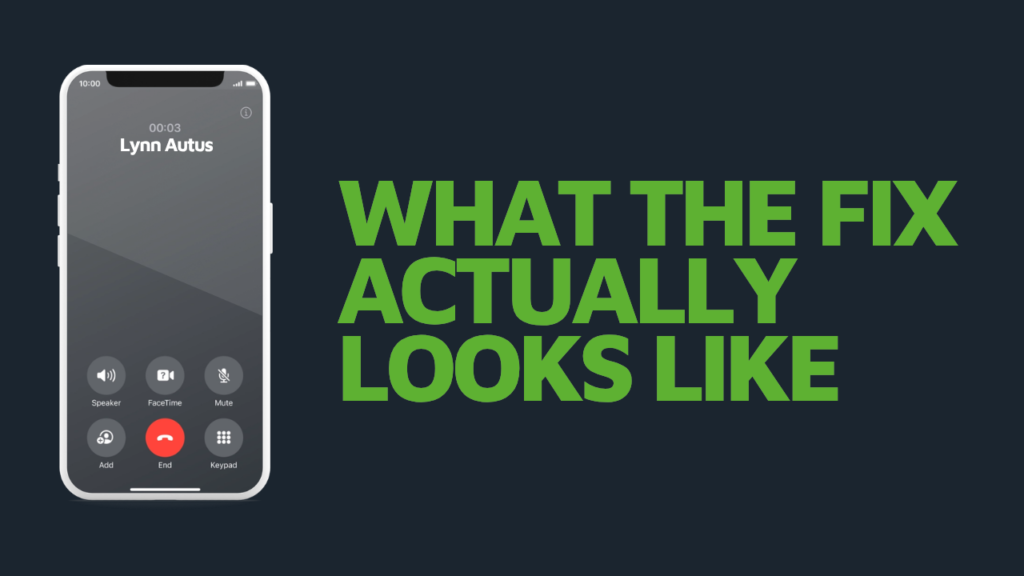
Speed and consistency are the two levers. Every lead needs a near-instant response, and every lead needs to be followed up multiple times if there’s no reply. The businesses that get this right don’t do it manually — they build systems that handle it automatically.
That’s exactly what Lynn is designed to do.
Lynn is an AI outbound calling agent that contacts new leads within seconds of enquiry — no waiting until the van is parked up, no leads sitting in an inbox overnight. She qualifies the prospect through a natural conversation, handles common questions, and routes serious buyers directly to your team. She works evenings. She works weekends. She doesn’t miss a call because she’s on the tools.
For trade businesses spending money on advertising and lead platforms, Lynn ensures that money isn’t being written off the moment someone goes to voicemail or has to wait until morning.
If any of the seven signs above sound familiar, it’s worth a conversation, try it for yourself by filling in the form below and see if it’s a fit (and get an opportunity to book a free 15-minute call with our Founder, Tom, to explore how this might help your business specifically)