Before You Spend More on Marketing in 2027 Read This
Introduction
Every December, the same conversation happens in businesses up and down the country.
The year’s numbers are in, January is around the corner, and someone asks: “Should we be spending more on marketing next year?”
It’s a fair question. But for most of the businesses we work with, it’s the second question they should be asking.
The first is this: how much of what you spent this year actually got the chance to work?
Here’s a pattern we see again and again.
A business pays to generate an enquiry, through a Meta ad, a Google search, a referral or a trade show.
That enquiry lands in an inbox at quarter to seven on a Thursday evening. It sits there until Monday.
It gets one callback, which goes to voicemail. Then it quietly disappears.
The marketing did its job. Everything after it didn’t.
The problem with “more leads”

More leads feels like progress. But if your response and follow-up can’t keep pace with the enquiries you already get, adding more simply fills a leaky bucket faster.
Run the numbers on your own business. Say you generate 40 enquiries a month and convert one in five. That’s eight new customers.
If faster responses and proper follow-up lifted that to one in four, you’d win ten.
Two extra customers a month is 24 a year, and you haven’t spent a penny more on advertising. Every one of those customers came from an enquiry you’d already paid for.
That’s the shift worth making before 2027: stop treating marketing as a spend line, and start treating it as a system.
The budget that attracts customers, the processes that convert them and the tools that keep them coming back should all be pulling in the same direction.
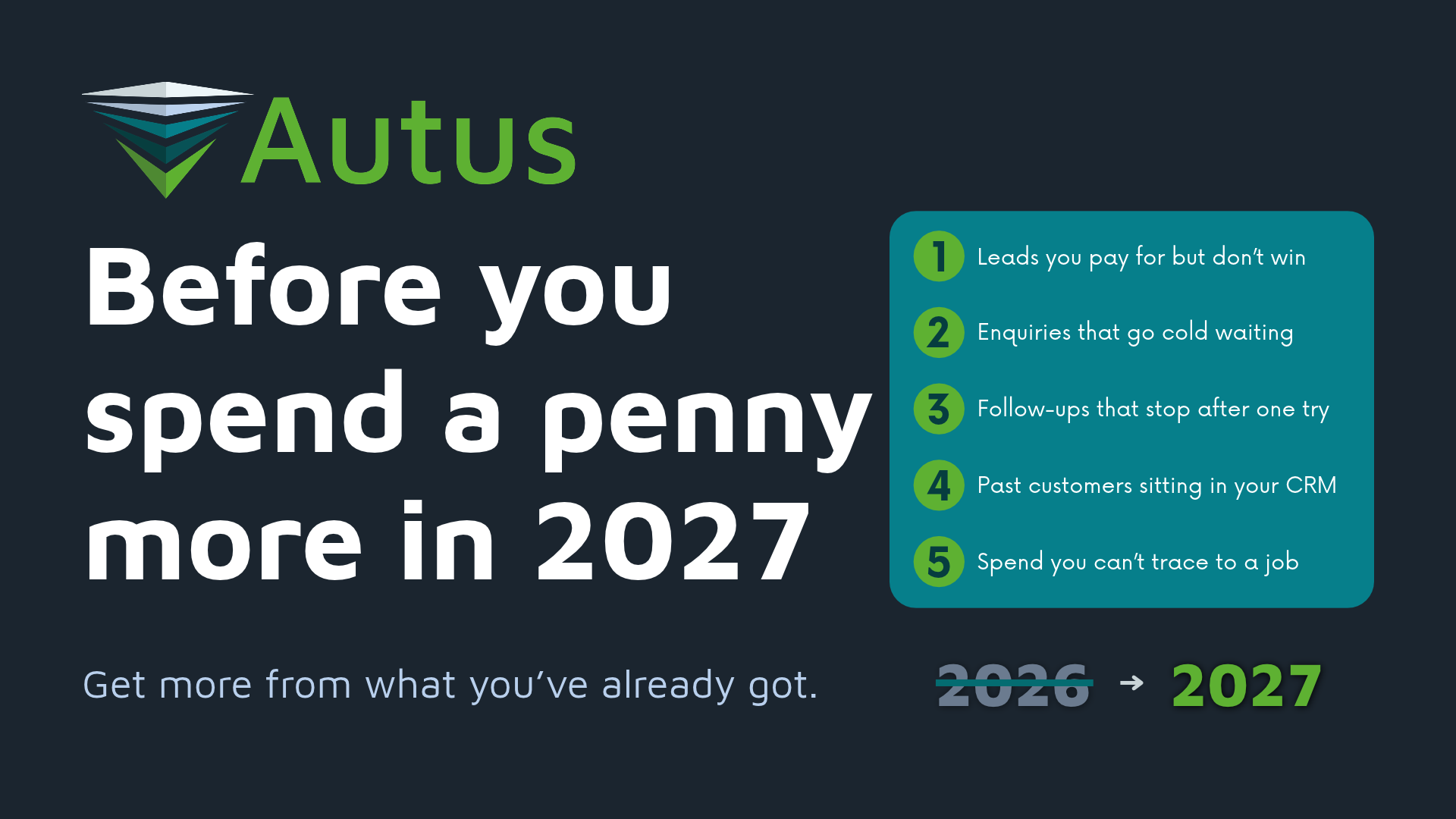
Five places your marketing budget is leaking
1. Slow responses to new enquiries
When a prospect contacts you, they’ve often contacted two or three of your competitors too. The business that responds first, and properly, has a real head start.
If enquiries arriving in the evening, at the weekend or during a busy job have to wait for someone to be free, you’re handing that head start away. Instant automated replies and AI-powered call handling mean every enquiry gets attention within minutes, even when your team is flat out.
2. Follow-up that stops after one attempt
One unanswered call shouldn’t mean a lost opportunity. People are busy, and plenty of them fully intend to come back to you; they just don’t get round to it.
A structured follow-up process, combining calls, texts and emails over a sensible time frame, keeps the conversation alive without anyone on your team having to remember to chase.
3. A database you’ve stopped talking to
Your next customer might already be in your CRM. Think about the quotes that didn’t go ahead, the enquiries that went cold, and the past customers who haven’t heard from you since their job was finished.
These people already know who you are. A targeted email campaign or automated reactivation sequence is often the quickest, lowest-cost win available to any business.
4. Activity without visibility
Clicks, likes and leads are useful signals, but they’re not the result. What matters is which campaigns produce appointments, quotes and paying customers.
Without that view, next year’s budget gets decided by gut feel. With it, you can put more behind what’s working and cut what isn’t.
5. Systems that don’t talk to each other
When your ad platforms, website forms, CRM, diary and inbox all operate separately, someone ends up re-typing details, chasing information and dropping the occasional ball.
Each gap is small. Together they cost you time, money and customers.
What a connected journey looks like

Picture this.
Someone sees your Meta ad on a Tuesday evening and fills in your enquiry form.
Within a minute, they receive a text confirming you’ve got their details, and a call from your AI receptionist, who answers their initial questions and books an appointment straight into your diary.
Their details land in your CRM automatically, tagged with the campaign that brought them in.
If they don’t book, a short follow-up sequence keeps the door open over the next fortnight.
If they go quiet, they join a nurture list, so your email marketing and social content keep you front of mind until they’re ready.
Once they become a customer, they’re asked for a review, and reminded when it’s time for their next service or purchase.
And at any point, you can see exactly which ad produced which job.
None of those pieces is exotic.
The value comes from joining them up, and that’s where Autus is different.
We bring Systems, Automation + AI and Marketing together under one roof, so nothing falls between the cracks of three different suppliers.
A five-question year-end check
Before you commit next year’s time and budget, take half an hour to answer these honestly:
1. How long does it take us, on average, to respond to a new enquiry, including evenings and weekends?
2. How many times do we follow up before we give up on a lead?
3. When did we last get in touch with past enquiries and previous customers?
4. Can we say which marketing activity produced our best jobs this year?
5. Do our ads, website, CRM and diary share information automatically, or does someone re-type it?
If two or more of those answers made you wince, that’s very likely where your best return in 2027 is hiding, and it will probably cost less to fix than another round of ad spend.
Make 2027 the year your marketing works harder
Imagine sitting down next December and knowing that every enquiry was answered, every quote was followed up, every past customer heard from you, and you could see exactly which activity paid for itself.
You don’t need to fix everything at once. Most businesses start with a single leak, usually response speed or reactivating their existing database, and build from there.
If you’d like a second pair of eyes, we’re happy to have a short conversation about how enquiries flow through your business today and where the biggest opportunities are for 2027.
If it turns out you’re already in great shape, we’ll tell you that too.