How to Get More Google Reviews Without Asking Awkwardly

Introduction
The job’s done. The new kitchen looks brilliant, the customer is beaming, and they say the words every tradesperson loves to hear: “I’ll be recommending you to everyone.”
This is the moment to ask for a Google review. You know it, and they probably know it too.
But it feels a bit like fishing for compliments. So you say thanks, pack up the van and drive off, and the review never gets written. That’s not because they didn’t mean it. It’s because by teatime, life got in the way.
Sound familiar? You’re not bad at asking. You’re relying on a moment that was never going to work.
Your next customer is already reading them

Reviews are no longer a nice extra.
According to a 2026 survey, 41% of people now always read reviews when browsing for a business, and 31% will only use businesses rated 4.5 stars or higher.
47% of consumers will not use a business with fewer than 20 reviews.
It isn’t only people reading them. Google AI Overviews and ChatGPT now surface review data and business ratings when answering local queries.
When someone asks “who’s a good kitchen fitter near me?”, your reviews help decide whether your name comes up.
Why two a month beats twenty in one go

Two reviews a month sounds small, and that’s the point.
Customers care about recent reviews far more than old ones: 74% of consumers only care about reviews written within the last 3 months.
A profile with 80 reviews where the newest is from last spring looks like a business that has gone quiet.
There’s also a trap in going the other way. Google is investing heavily in detecting suspicious behaviour at scale, using machine learning to identify patterns like unnatural review velocity.
A weekend blitz of your whole customer list can do more harm than good.
A steady trickle tells customers, and Google, that you’re busy, trusted and still going strong.
The awkward part isn’t the ask. It’s the timing.
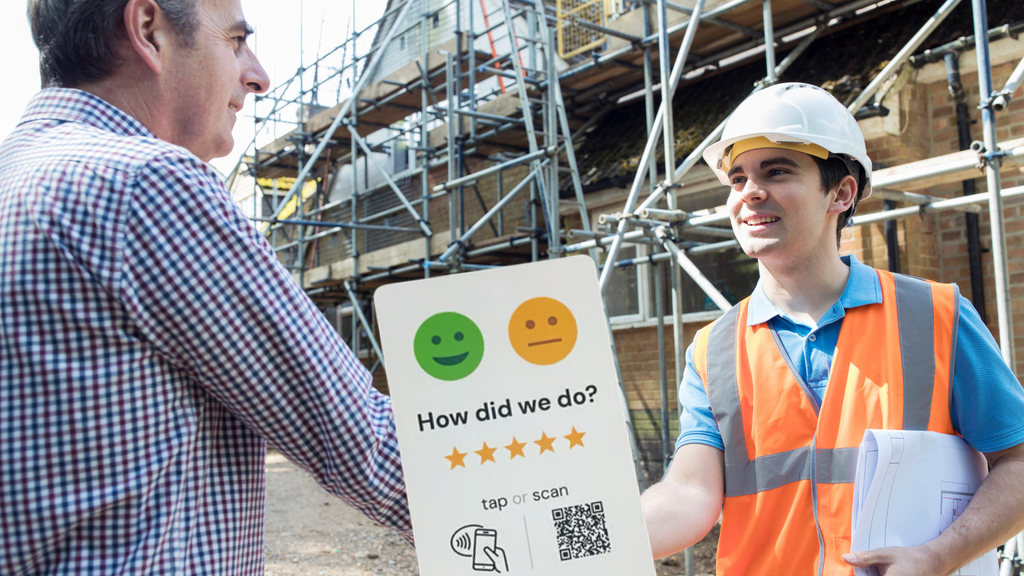
Asking face to face, in someone’s hallway, while they’re still holding the door open, is what makes it uncomfortable. They feel put on the spot, and so do you.
Now picture the same customer that evening, on the sofa with their phone, getting a friendly text from you with a link that takes one tap.
Nobody is put on the spot, and it takes them thirty seconds.
The customer is the same in both cases. The moment is what changed.
The system that asks for you
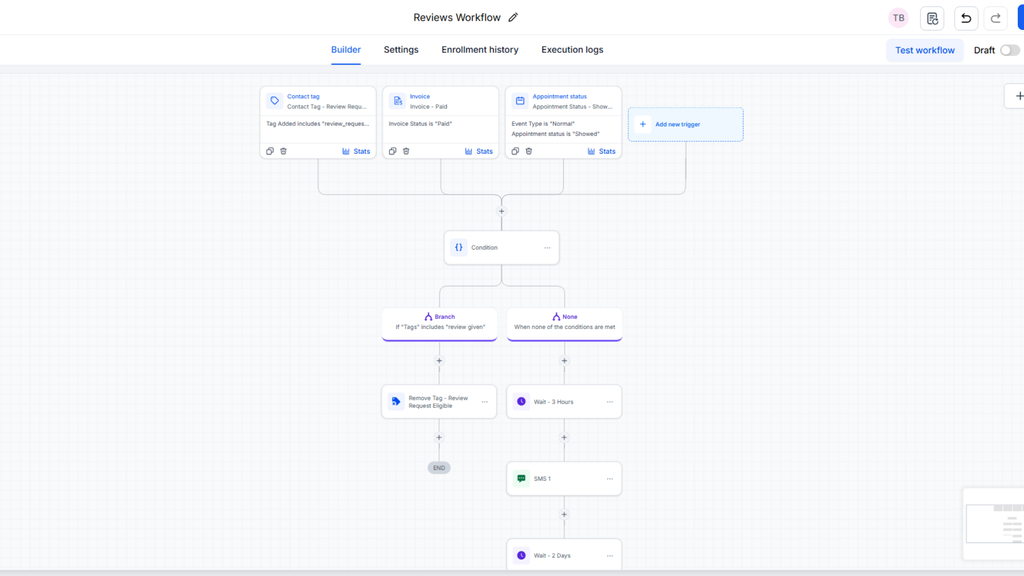
This is how we set it up for trades businesses:
- The trigger: the job is marked complete in your CRM, and that starts everything.
- Same day: a short, friendly text goes out in your name, thanking them and including a direct link to your Google review form. They don’t have to search for anything or log in.
- Two days later: if they haven’t left a review, a gentle email reminder follows.
- Everyone gets asked: every customer, on every job, not just the ones you think went well. Add a line inviting them to reply if anything wasn’t right, so you hear about problems directly.
- Every review gets a reply: a quick, genuine thank-you shows the next reader you care.
Now do the maths. If you finish 8–10 jobs a month and every customer is asked automatically, two new reviews a month is a conservative target, not a stretch.
Once the reviews are coming in, put them to work.
Use them in social posts and ad creative, add them to your website, drop one into your email signature, and include them in follow-up emails to leads who haven’t booked yet.
Real words from real customers do more selling than anything you could write yourself.
The happy customer is still there
The customer saying “I’ll recommend you to everyone” hasn’t gone anywhere. The difference is that you no longer have to find the words. The system says thank you and asks for you, every time, at the right moment.
Want a review system that runs itself after every job? Book a free 15-minute call with Tom and we’ll show you exactly how it would work for your business.